
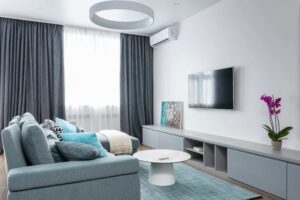
I remember sitting in Rajesh’s empty office space in Gurgaon back in 2021, and honestly, it was depressing. Bare walls, flickering lights, and that stale smell you get in places that haven’t been touched in years. He’d just signed the lease and had no idea what to do. We were sitting there drinking chai from a plastic cup, and he kept asking me, “How do I even start?” I didn’t have a great answer for him then, but I knew one thing—whatever we did, we couldn’t just wing it.
That’s when we started looking around. I wasn’t in the interior design business or anything, but I knew enough to know that we needed someone who actually understood how people work. Not just someone who could slap paint on walls and arrange furniture. We spent weekends touring offices around the city, talking to people who worked in them, getting a real feel for what made spaces work and what made them miserable.
The first place we visited had been designed by one of the best interior designers in Gurgaon. Walking in, you could immediately feel the difference. The guy had thought about light—lots of windows, glass partitions, even the artificial lighting didn’t feel harsh. The layout made sense. There was a collaborative area where people naturally gathered, quiet zones where you could actually focus, and a kitchen that didn’t feel like an afterthought. When we talked to people working there, they genuinely liked coming in. One guy told us he used to dread Mondays until they redesigned the space. That stuck with me.
The Shift That Changed Everything
Rajesh eventually hired someone recommended by people we’d met at that office. It took about four months from start to finish—way longer than he expected, but worth every day of it. Watching that empty shell transform into somewhere people actually wanted to be was something else. When the team moved in, the energy was completely different. People started collaborating more. New hires weren’t disappointed when they first walked in. Even Rajesh himself seemed happier just being there during the day.
I got curious after that. I started paying attention to how office spaces made me feel. You walk into some places and you’re immediately stressed. The lighting’s bad, the layout’s cramped, things feel cheap. You walk into others and you just want to sit down and get to work. The difference is rarely about money spent. It’s about someone actually thinking through how humans work and designing for that instead of just designing for aesthetics.
I started asking business owners about their spaces more. Almost all of them had regrets. Either they’d chosen someone cheap and it showed, or they’d hired someone who designed beautiful spaces that were terrible to actually work in. There’s a sweet spot where things look good AND function well, and most people struggle to find it.
Understanding What Really Matters
About two years ago, I met a designer doing work in Dwarka. He ran his own small practice and had this incredibly methodical approach. Before proposing anything, he’d spend weeks just understanding his clients’ businesses. He’d watch how people moved through their current spaces, where conversations happened naturally, where people felt stuck or frustrated. He’d ask questions most designers wouldn’t ask—not about style preferences, but about how the business actually operated.
The best interior designer in Dwarka I met was exactly like this. He told me that 80% of his job was listening and understanding, and 20% was actual design. Most designers, he said, get it backwards. They come in with their style and try to fit the client into it. He did the opposite. He’d disappear for a week, come back with a design that felt inevitable, like of course the space should be organized this way.
One project he showed me was this accounting firm that needed to feel professional but wasn’t drowning in money. Instead of trying to make it look corporate and slick, he worked with what they had. Good quality but affordable materials. Smart use of color to make the space feel bigger. Excellent lighting that made the work easier. The result was a space that felt professional without feeling cold, and it cost less than trying to do it fancy.
I asked him what made the difference between good designers and mediocre ones. He said it was simple—good designers solve actual problems. Mediocre designers make things look nice. The best ones do both, but if they have to choose, they pick the problem-solving.
The Reality of Different Areas
Working with people across Delhi NCR taught me that each area has its own character and its own challenges. Best interior designers in Gurgaon are dealing with a completely different market than designers in other parts of the region. Gurgaon’s got money. Companies there are competing hard for talent, and they know that office space affects recruitment and retention. The design bar is higher there. When you walk into a Gurgaon office designed by someone good, it shows—premium materials, thoughtful details, spaces that feel like they cost serious money.
Dwarka’s different. You’ve got growing companies, midsize operations, startups that are doing well but don’t have corporate budgets. What works there is intelligence, not spending. A designer who thrives in Dwarka knows how to punch above weight—make smaller spaces feel bigger, use color and light strategically, source decent materials without the premium markup. They understand the market they’re serving.
Central Delhi has old buildings with character but also constraints. Narrow floor plates, weird layouts, old infrastructure. A good designer there doesn’t fight the building. They work with it. They know which builders understand how to work with older structures, they understand the quirks of different neighborhoods, and they’re not trying to impose some cookie-cutter aesthetic.
The Messy Middle—What Nobody Talks About
Here’s what they don’t tell you before you start a project: it’s chaotic. Your team still needs to work. Construction takes longer than planned. You find out halfway through that you can’t do what you wanted because the building won’t allow it. Materials get delayed. Your contractor suddenly can’t start on the timeline you agreed to.
I watched a friend deal with all of this when he renovated his office space. The designer he’d hired had done maybe ten projects before, and she panicked the moment something went wrong. When they discovered structural issues with the floor, she froze. When the HVAC system turned out to be more complicated than expected, she had no solutions ready. It ended up costing him twice as much and took three times as long.
But another friend working on office interior designers in Dwarka Expressway had a completely different experience. His designer had seen every possible problem before. When something went sideways, she already had three solutions ready to go. She had relationships with contractors who could adapt, she knew how to problem-solve, and she didn’t panic. That experience is the difference between a project you regret and a project that actually improves your business.
What Actually Works—The Details
After watching a bunch of these projects happen, I’ve noticed what consistently makes people happy in their work spaces.
Light is everything. I’m not being poetic here—it’s science. People’s moods, energy levels, and focus all depend on light quality. Under harsh fluorescent lights, people get tired and stressed. Under good light, they perform better. A designer who gets this doesn’t just throw in some nice lamps. They think about window placement, use glass partitions to spread light, choose light colors that reflect light, and use artificial lighting that mimics natural light. It sounds simple, but most offices get it wrong.
Noise control is another one nobody thinks about until it’s a problem. An open office sounds great in theory. In practice, when five conversations are happening around you and you’re trying to focus on something that requires concentration, it’s torture. Good spaces have zones—areas where collaboration and noise are fine, quiet areas where people can actually think, semi-private spots for calls or meetings. The best spaces feel like they naturally guide you to the right place depending on what you’re doing.
Comfort is non-negotiable. Bad chairs destroy your back. Desks at the wrong height cause neck and shoulder pain. Too hot or too cold kills productivity. Bad air quality makes you tired. These aren’t luxuries—people are sitting there eight hours a day. A designer who ignores this is making a mistake.
And the space needs to actually match who you are. If you’re a creative agency and the space is all rigid and corporate, it kills the energy. If you’re a law firm and it’s too casual, it undermines trust. The space should amplify your culture, not fight it.
What I’ve Learned About Choosing Someone
Honestly, finding a good designer is harder than it seems. Everyone’s portfolio looks good. Everyone can make things look nice in photos. But here’s what actually matters when you’re talking to potential designers.
Do they ask good questions? Are they curious about your business, or are they just trying to sell you their style? Do they listen more than they talk at first, or are they already pitching ideas before they understand what you actually need? The designers I trust are the ones who ask a lot of questions and listen to the answers.
Can they handle problems? Ask about their biggest challenges on past projects. Not to scare you, but because how they handled problems tells you everything. Can they stay calm? Do they have solutions? Do they have relationships with contractors and vendors who can adapt?
Have they done work you actually respect? Not just pretty pictures—walk through real spaces if you can. Talk to people who work there. Ask them the hard questions: Does this space actually work? What would you change? Did it go as planned? That real feedback matters way more than the designer’s own portfolio.
Why This Actually Matters
Your office space affects everything. How your team feels about coming to work. How creative they are. How productive they are. How long they stay. How new hires perceive your company. Whether clients feel confident in you. Whether you’re able to attract the people you want to work with.
The companies that are winning right now understand this. They’re not spending recklessly—they’re being smart about it. They’re investing in spaces that actually work for how their business operates, that actually make people happy, that actually improve their business.
Best interior designers in Delhi NCR who really understand this aren’t trying to create Instagram-perfect spaces. They’re creating workspaces that solve real problems, that feel good to actually work in, that improve your business. They understand that your office is one of the smartest investments you can make, and they design like it.